Address
Sofia Center Sofia, Bulgaria 1000
Address
Sofia Center Sofia, Bulgaria 1000

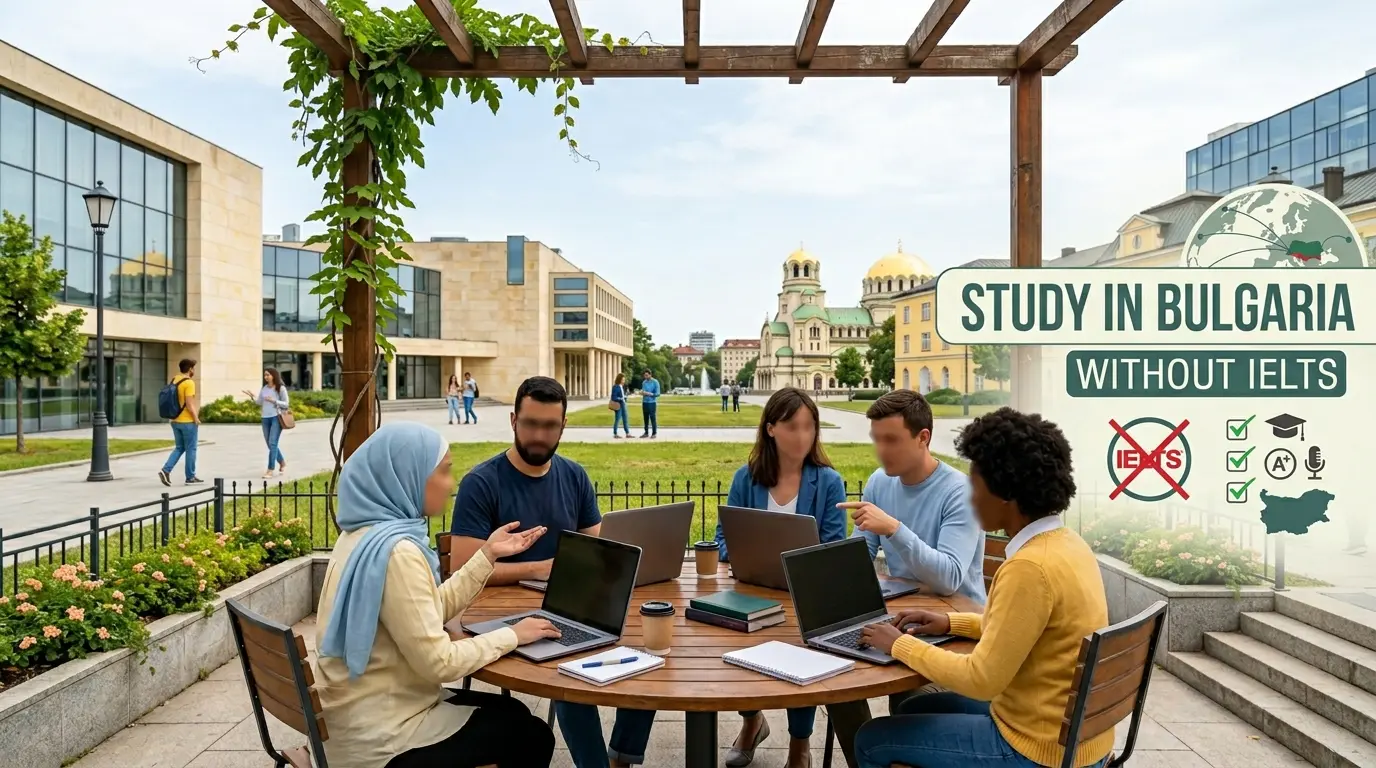
Many international students are searching for ways to study abroad without taking English language tests. One of the best options available today is study in Bulgaria without IELTS 2026, as many universities offer flexible admission requirements.
In this guide, you will learn everything about study in Bulgaria without IELTS 2026, including requirements, universities, and application process.
Choosing study in Bulgaria without IELTS 2026 has many advantages:
This makes study in Bulgaria without IELTS 2026 a popular choice for students worldwide.
Yes, you can study in Bulgaria without IELTS 2026 in many universities.
Instead of IELTS, universities may accept:
This flexibility makes study in Bulgaria without IELTS 2026 easier compared to other European countries.
Some universities that allow study in Bulgaria without IELTS 2026 include:
Each university has its own policy, so always confirm before applying.
To apply for study in Bulgaria without IELTS 2026, you typically need:
Some universities may ask for a short interview to check your English level.
Yes, choosing study in Bulgaria without IELTS 2026 is safe if:
Always verify the university before applying.
Yes, many programs under study in Bulgaria without IELTS 2026 are taught in English, especially:
This makes it easy for international students to adapt.
Follow these steps:
The cost of study in Bulgaria without IELTS 2026 is the same as normal programs:
To study in Bulgaria without IELTS, you have several options, though you typically must demonstrate English proficiency through other means. Here’s a comprehensive guide on the requirements, universities, and alternatives.
While IELTS is a recognized test for English proficiency globally, it is not always mandatory for international students wishing to study in Bulgaria. Here’s how you can bypass the IELTS requirement:
Bulgarian universities usually accept other proof of English proficiency. These alternatives can often substitute for IELTS:
TOEFL: If you have taken the TOEFL exam, universities commonly accept this test as an alternative to IELTS. Check the specific score requirements of the university.
University-Specific Entry Tests: Many Bulgarian universities, especially those that specialize in medicine, engineering, or humanities, design their own English proficiency and entrance exams. Students can opt to take these internal tests upon arrival in Bulgaria or online during the application process instead of submitting a standardized test like IELTS.
English as a Native Language: If you are a native English speaker from an English-speaking country, you are generally exempt from providing any English proficiency test scores.
Previous English-Medium Education: If you have completed your high school or previous higher education studies at an institution where the primary language of instruction was English, you may be exempt from the IELTS requirement. You will typically need to provide an official letter from your previous school confirming that your studies were conducted in English.
Study in the Bulgarian Language: If you are willing to learn the Bulgarian language, you can apply for a program taught in Bulgarian. You would need to complete a mandatory one-year Bulgarian language preparatory course, which often includes language training and preparatory subjects related to your future degree.
Several universities in Bulgaria are known to admit students without requiring IELTS, especially in their English-medium programs or through their own entry systems:
Sofia University St. Kliment Ohridski: As the oldest and most prestigious university in Bulgaria, Sofia University offers several programs in English and may accept alternatives to IELTS.
Technical University of Sofia: Known for its engineering and technical programs, it has a robust selection of English-taught courses.
University of Architecture, Civil Engineering and Geodesy (UACEG): Offers programs in English and accepts university-conducted proficiency tests.
American University in Bulgaria (AUBG): Since all instruction is in English, AUBG has strict English proficiency requirements but accepts several tests and may offer alternative evaluation methods.
Varna University of Management: Focuses on business, hospitality, and IT programs, with courses in English and flexibility in language requirements.
Medical Universities (Sofia, Plovdiv, Varna, Pleven): These universities have their own intensive entry exams which include language and science components, often negating the need for IELTS.
Medical universities are popular for international students. To study medicine, dentistry, or pharmacy in English:
Entrance Exams: The main barrier to entry is the specialized entrance exam set by each university (testing biology, chemistry, and often English), rather than a general language test like IELTS.
Preparatory Courses: These universities typically offer strong one-year preparatory language courses (in English or Bulgarian) for students who do not meet initial proficiency requirements.
Though IELTS may not be needed, you must still fulfill other admission criteria. The typical application process for Bulgarian universities involves:
Check Entry Requirements: Visit the official website of the Bulgarian university and the specific department for your chosen program to confirm their current language and general entry requirements.
Prepare Documents: Gather your high school diploma (for undergraduate) or bachelor’s degree (for postgraduate), transcripts, health certificates, and other necessary documents.
Translate and Legalize Documents: All documents from foreign institutions must be translated into Bulgarian by an authorized translator and legalized by the relevant authorities (e.g., Apostille from your home country’s Ministry of Foreign Affairs).
Submit Application: Apply through the university’s online application portal or via mail.
Receive Admission Letter: If successful, you will receive an acceptance letter from the university.
Apply for Visa: International students from outside the EU/EEA will need to apply for a Type D student visa at the Bulgarian embassy in their home country. The acceptance letter from the university is a key component of the visa application.
If you want to study abroad easily, study in Bulgaria without IELTS 2026 is one of the best options. With flexible requirements and affordable costs, it’s a smart choice for many students.while specific policies vary between universities and programs, there are multiple avenues to study in Bulgaria without an IELTS score. By demonstrating English proficiency through tests like TOEFL, university-conducted exams, previous English-medium education, or choosing to study in the Bulgarian language, you can pursue your academic goals in this beautiful European country. Always refer to the specific university websites for the most accurate and up-to-date information.
